Shun'en Kyûsu 270 ml
Shun'en Kyûsu 270 ml
This kyûsu is something completely special in many respects. In Japan, there are generally only a few potters who additionally decorate their works sculpturally, as this step not only requires the necessary talent but is also very time-consuming. Perhaps the best-known potter of this style is Shun'en II, who followed in his father's footsteps at the age of 24. He adopted his father's style and created something new from it. Today, Shun'en, who was born in 1950, is known for his lovingly crafted teapots made of Tokoname clay, featuring typically Japanese motifs.
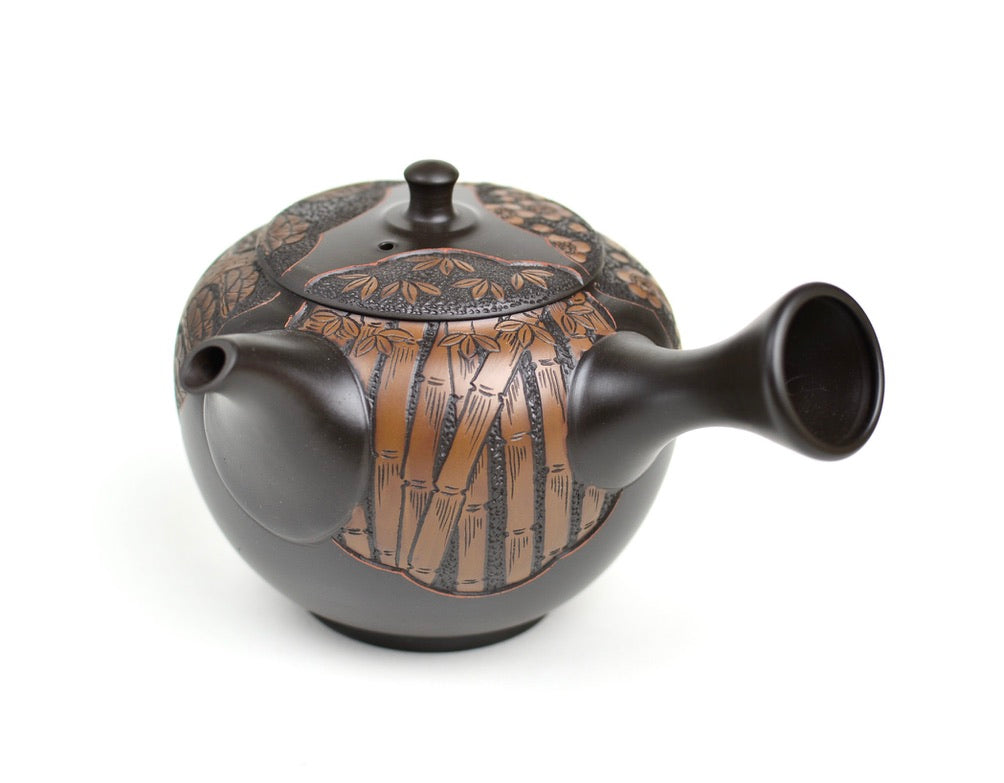
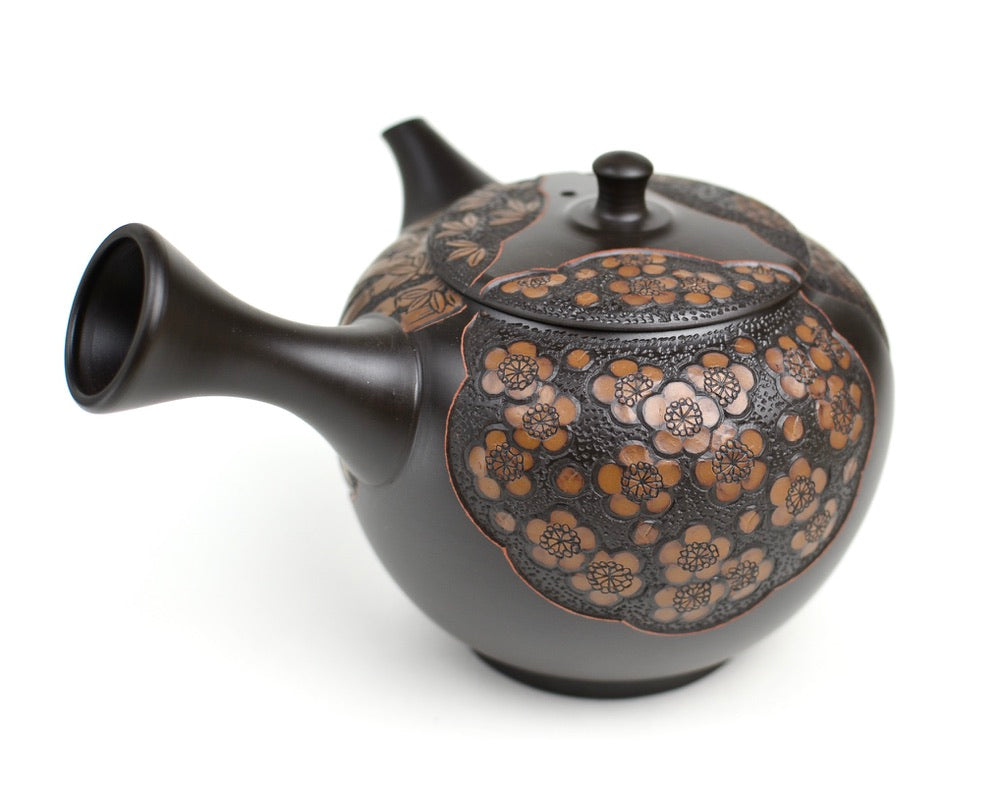
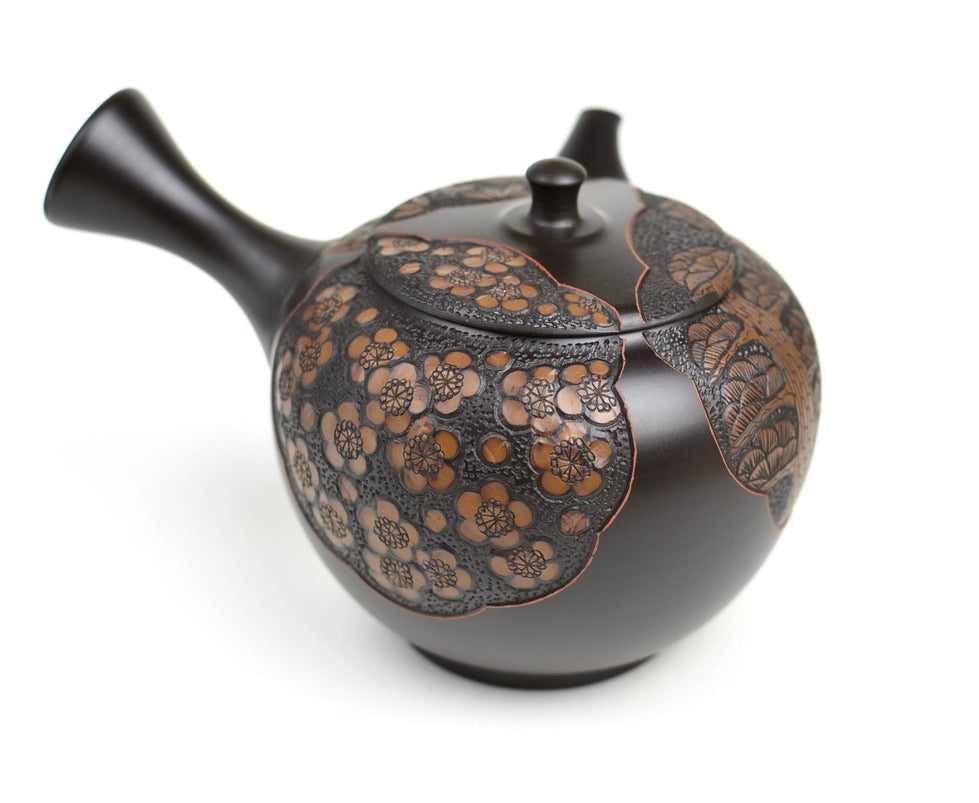
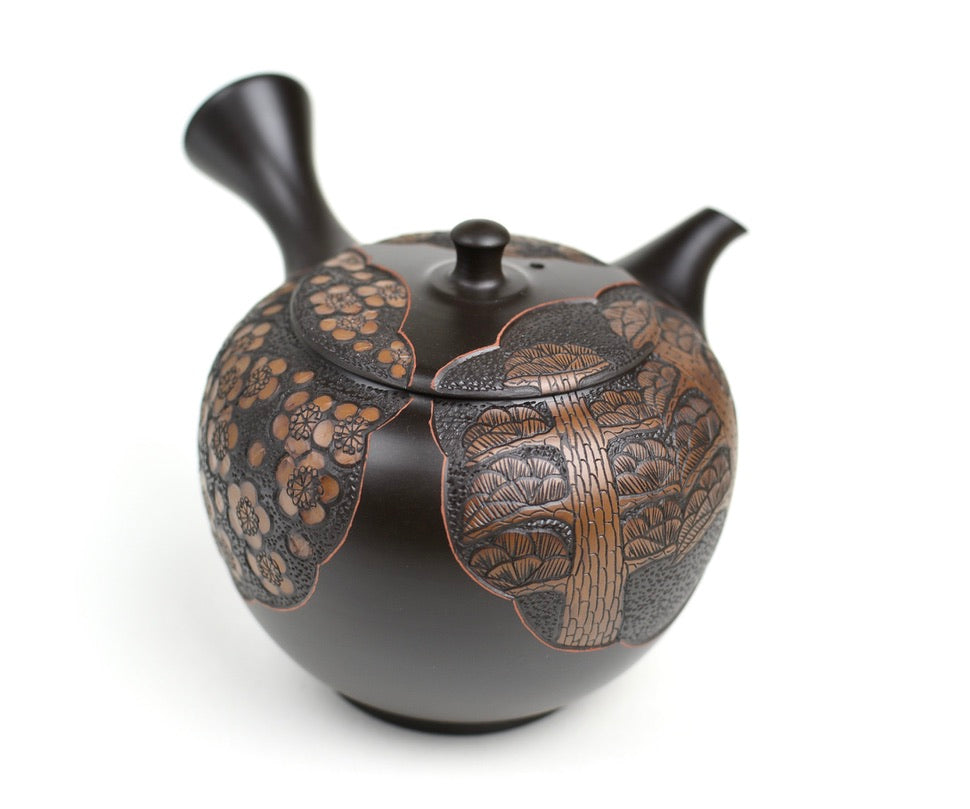
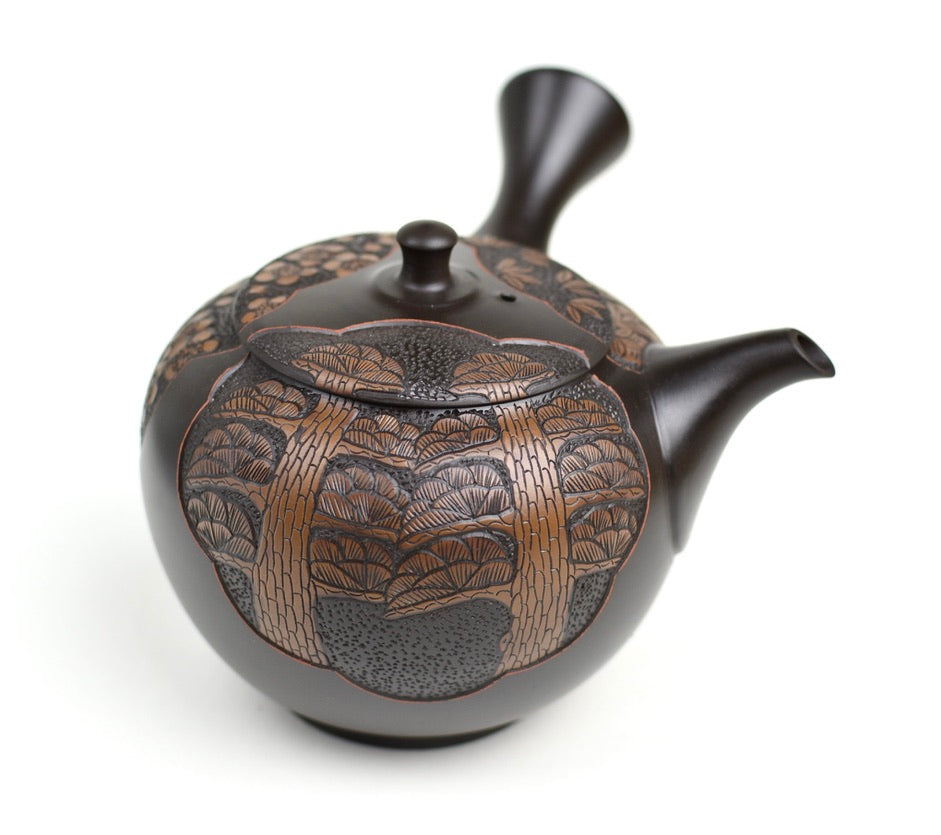
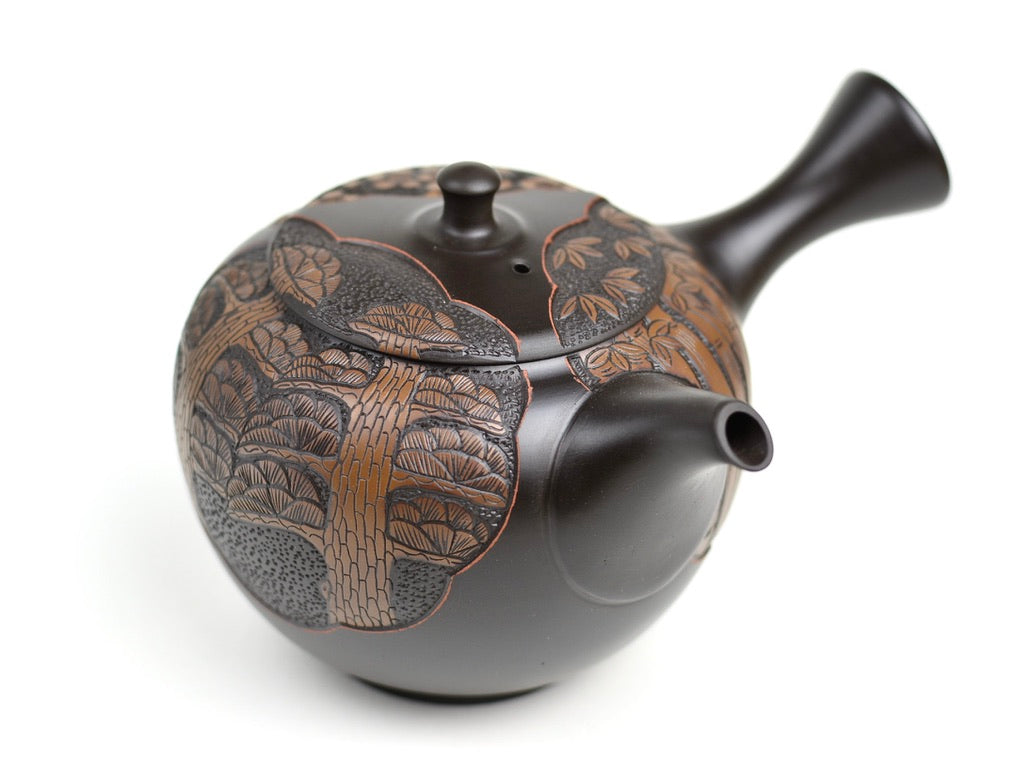
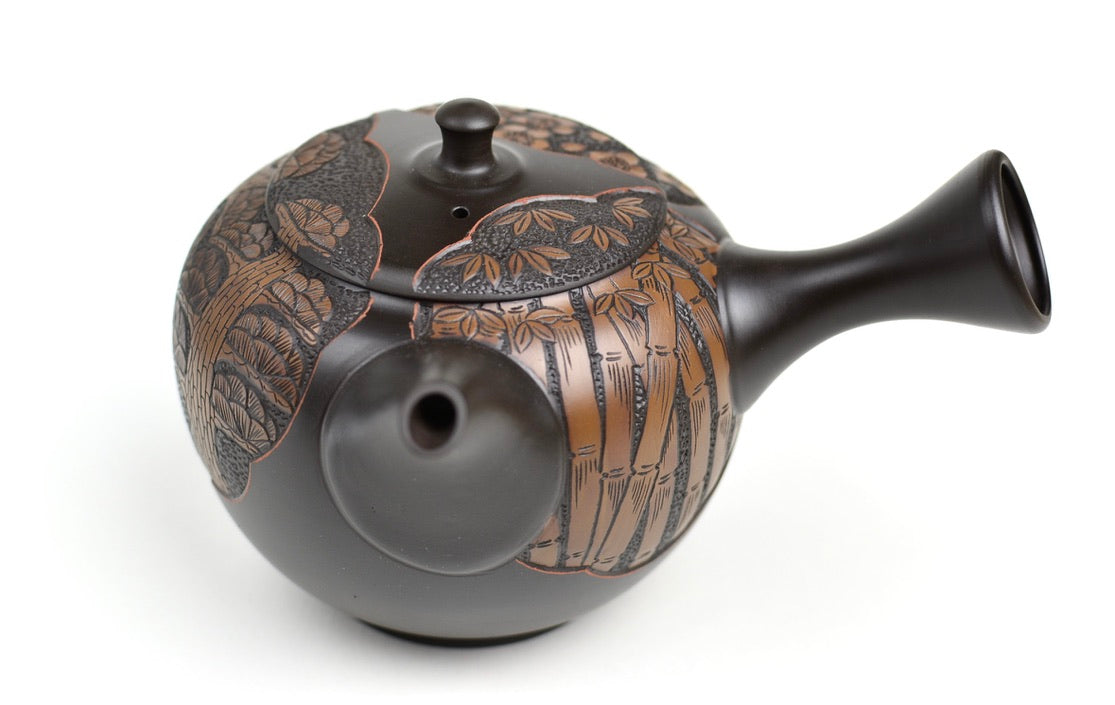
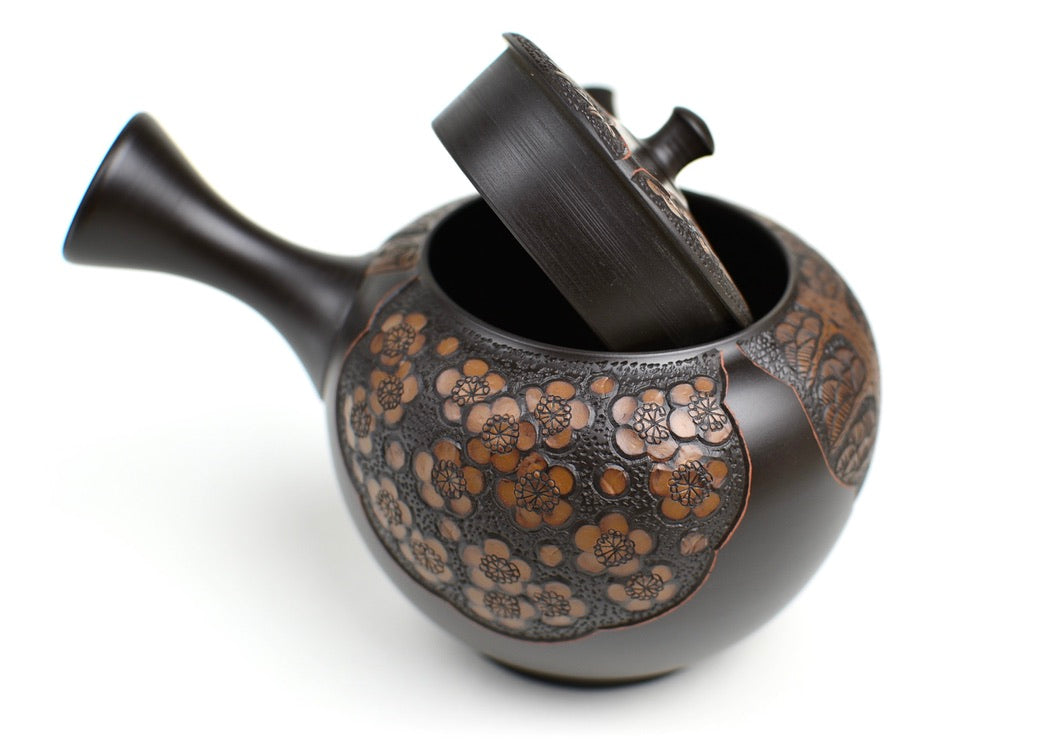
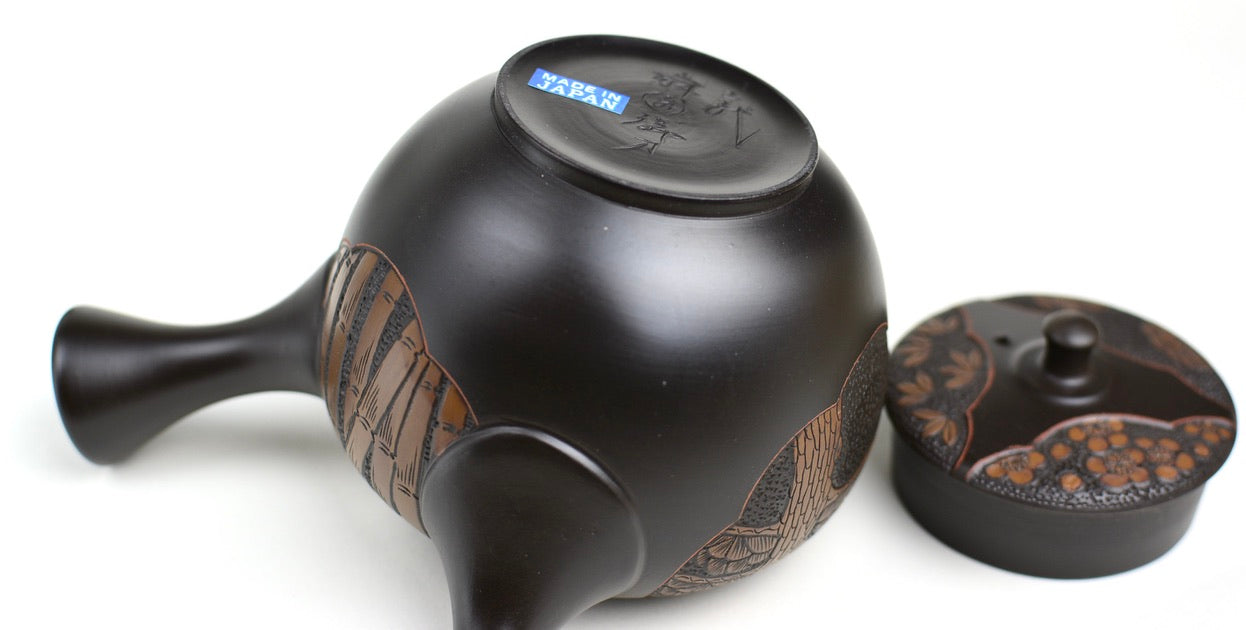
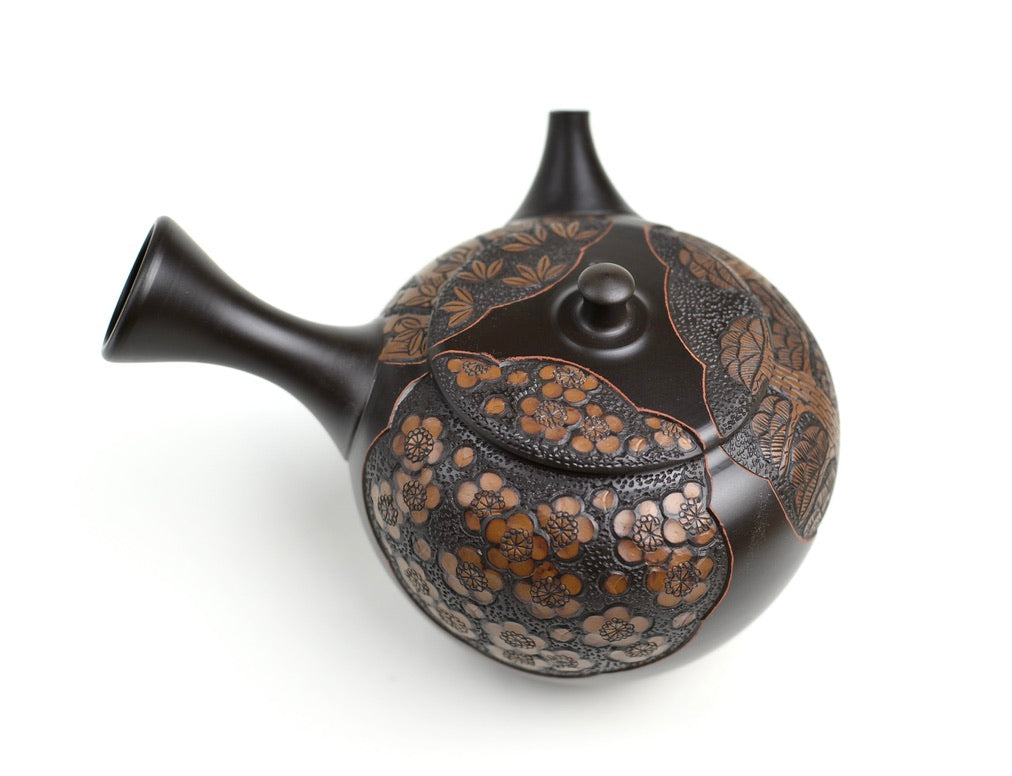
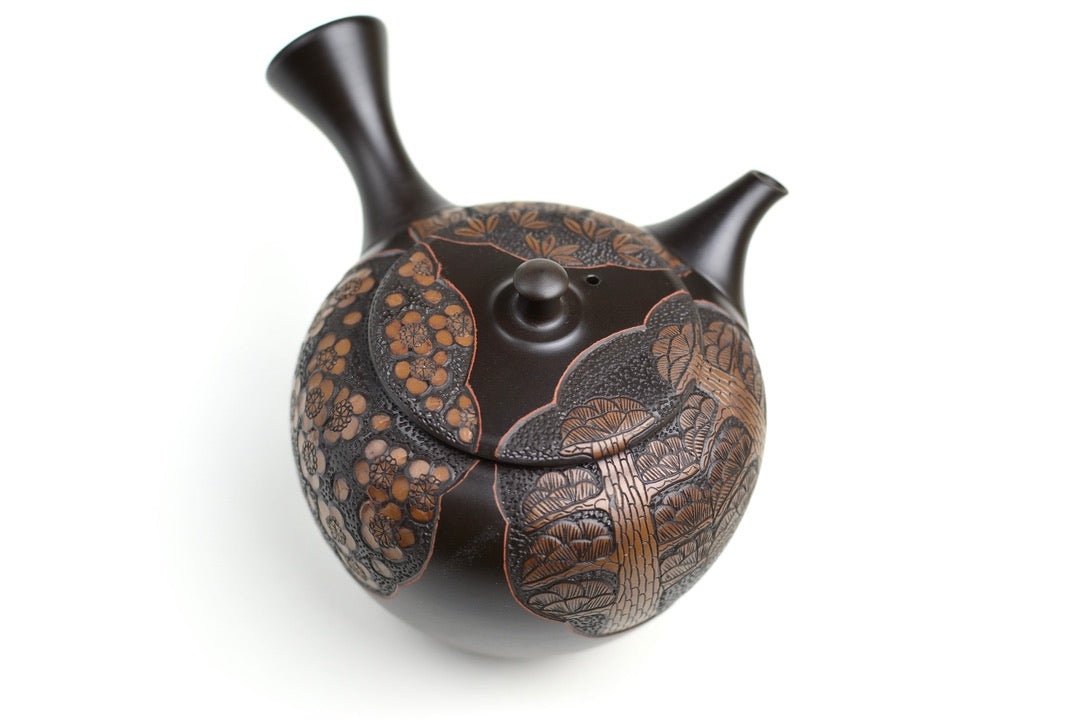
For this teapot, Shun'en uses a centuries-old motif: the "three friends of winter" (Shô Chiku Bai), which has frequently been used as a motif in prose and painting. The evergreen pine, the equally green bamboo, and the plum blossom, which blooms in winter, inspire people during the cold season with their beauty while most other plants are dormant. They are so deeply rooted in Asian culture that in Japan, the "three friends" are placed as an arrangement in front of the door for the New Year.
All the motifs are crafted with the utmost care and form a seamless whole between the teapot body and the lid. A masterpiece of breathtaking beauty! This teapot comes in a signed wooden box (tomobako).
Tokoname is the oldest of the "Six Ancient Kilns". Ceramics have been fired in today's Aichi Prefecture since the year 1100. In the early days, potters focused on producing unglazed utilitarian ceramics. Around 1200, with approximately 3,000 kilns, it was Japan's largest ceramics center.
In 1840, the first potters in Tokoname tried to imitate Yixing ceramics using iron-rich clay. For red shudei ceramics, the finest fraction of a very iron-rich clay found under rice fields is required.
When it was discovered that tea tasted better from Tokoname utensils, demand grew. From 1860, Tokoname potters tried to copy the polished surface of Yixing ceramics. In 1877, they succeeded with the help of the Chinese scholar Jin Shi Heng and other specialists. The surface of the teapot must be carefully polished with a metal spatula so that the clay compacts. Today, Tokoname is known for the colorful variety of side-handle teapots (kyûsu). In addition to modern shapes, designs, and colors, traditional red teapots are also produced, which, like their counterparts from China, can be decorated with poems.
This kyûsu is something completely special in many respects. In Japan, there are generally only a few potters who additionally decorate their works sculpturally, as this step not only requires the necessary talent but is also very time-consuming. Perhaps the best-known potter of this style is Shun'en II, who followed in his father's footsteps at the age of 24. He adopted his father's style and created something new from it. Today, Shun'en, who was born in 1950, is known for his lovingly crafted teapots made of Tokoname clay, featuring typically Japanese motifs.
Pflegehinweise
Pflegehinweise
Nicht mit Spülmittel reinigen, nicht in Spülmaschinen-geeignet.
Low stock: 1 left